
Who’s Liable for Injuries Caused by Broken Water Meter Covers in Georgia?
Why do broken water meter covers go unrepaired?
You might assume that if there is a problem that causes injuries that are widespread, it would be addressed and the problem would be solved. You’d think that it would cost more money to undergo lawsuits, and simple things like covering a water meter would be less costly than repairing a person.
It doesn’t always work out that way. When a local government and/or business is not functioning well, it often shows up in how it responds to liabilities. When it’s difficult for individuals to sue, like in the case of a city government, then problems can linger and not become a priority.
If you or a loved one has been injured by a broken or missing water meter cover in Georgia, schedule a free consultation with the experienced Peachtree Corners premises liability attorneys at McGahren Law to discuss your legal options.
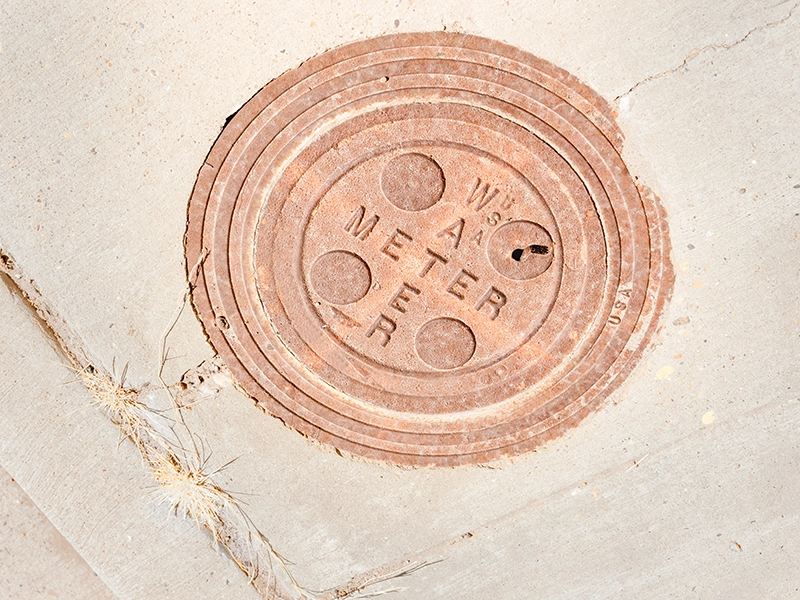
How do you prove negligence if you’re injured by a broken water meter cover?
To sue a city or a business for an injury sustained on their premises or with their equipment, negligence must be proved. Negligence is the failure to act with reasonable care.
If you slip on a floor because there is a puddle, you need to prove that the other party knew of the problem and did nothing, or they did not take reasonable care to prevent the problem.
Cleaning the floors each day and having someone on the calendar to inspect the floor a few times a day could be considered a “reasonable precaution.” An affidavit from a former manager saying they never followed this schedule would be evidence.
Likewise, a city may have a duty to reasonably inspect and maintain water meter covers. Failing to perform those inspections and repair or replace broken, faulty, or missing covers may be evidence of negligence.
When can a city be held liable for a broken water meter cover?
The state can be liable for negligence or acting poorly in their duties.
Under section 36-33-1 part B of the Official Code of Georgia Annotated (OCGA), “Municipal corporations shall not be liable for failure to perform or for errors in performing their legislative or judicial powers. For neglect to perform or improper or unskillful performance of their ministerial duties, they shall be liable.”
In other words, while cities are generally protected from liability for certain governmental decisions, they may still be held responsible if they negligently perform routine responsibilities such as inspecting, maintaining, or repairing public property.
Claims arising from such events as auto collisions and slip and fall accidents are allowed under GTCA. You can make a claim if you are injured by a government employee while in the course of their work or in a state-run building with dangerous property conditions.
Evidence of ongoing water meter problems in Atlanta
In 2012, the AJC reported that the City of Atlanta had installed as many as 10,000 faulty water meters, incorrectly billing customers.
In 2015, the Atlanta Journal & Constitution (AJC) reported that “Former Atlanta Watershed workers file whistleblower lawsuit,” reporting that Gwendolyn Winston and Loren Yarbrough, two former workers, filed suit over myriad concerns regarding health violations, safety hazards, compliance issues, and fraud inside the department. Coincidentally, among the items reported stolen or missing: 10,000 water meters.
Noting that water meters are faulty by itself does not necessarily relate to broken or missing covers, but as a pattern, might indicate the lack of a procedure or negligence. A reasonable person could assume that inspection of the meters would likely uncover the fact that the covers were improperly installed or that, perhaps, growing roots had displaced it, causing a hazard.
It could be argued that inspections either aren’t happening or, during their work, city workers may not know or be instructed to fix covers. The safety hazards and working conditions at the agency carrying out the responsibilities of the state may show a habit of negligence that could carry over to the water meter covers that citizens interact with.
Additionally, the city has its fair share of prior injurious incidents:
In 2009, the City of Atlanta paid $325,000 to one woman for an injury due to a broken water meter. Using a legal theory under the Nuisance Law and a Freedom of Information Act (FOIA) request.
In 2011, a person stepped into an open water meter in Little Five Points. It was found that the city had previously paid $90,000 to another person injured by the same water meter 9 months earlier. The city settled for $240,000.
In 2015, a person broke both bones in their lower leg, resulting in surgery, after stepping into an open water meter covered with leaves. The city denied knowing about the hazard until an article in a local newspaper showed the exact same missing water meter cover. The city paid $275,000 to settle the case.
FAQs about broken water meter covers in Georgia
Responsibility depends on the location of the water meter and the policies of the local water utility or municipality. In many cases, water meters and their covers are owned and maintained by the city, county, or local water utility, but responsibility can vary.
Not necessarily. Liability depends on the specific facts of the case, including who owned and was responsible for maintaining the water meter cover, where it was located, and whether negligence was involved. Simply because a water meter cover is located on or near your property does not automatically mean you are legally responsible.
If someone has been injured by a broken water meter cover on your property and you have questions about who may be liable, reach out to a premises liability lawyer in Peachtree Corners who can evaluate the circumstances and help determine who may be responsible.
A city may still be liable even if it claims it didn’t know about the broken or missing water meter cover. In some cases, the issue is whether the city should have known about the dangerous condition through reasonable inspections or maintenance. Maintenance records, prior complaints, inspection reports, and previous incidents may all be relevant evidence.
Injured by a broken or missing water meter cover in Georgia?
Broken water meter cover claims can be challenging because they often involve government entities, questions about who was responsible for maintaining the property, and strict legal rules that don’t apply to ordinary personal injury cases.
The experienced Peachtree Corners personal injury attorneys at McGahren Law have more than 3 decades of experience investigating these claims, identifying the responsible parties, and gathering the evidence needed to prove negligence throughout Georgia.
If you or a loved one has been injured because of a broken or missing water meter cover, contact McGahren Law today for a free consultation to learn how we can help you recover the compensation you deserve.